The jury’s focus: A high-rise building should be a ”good neighbour”
The jury for this 12th International High-Rise Award focused on the question of what role high-rises might play in the future. Regardless of aesthetics and function, the jury agreed that a high-rise building’s ability to ”be a good neighbor” is of fundamental importance. In other words, a high-rise building should give something back to its surroundings, enhance the context in which it stands, and benefit both the city in which it was built and the people who live there. The jury’s starting point was the idea that the winning high-rise should still be relevant fifteen years in the future. An additional question increasingly relevant in the European context, concerns refurbishment: how can high-rises be transformable and how can they accommodate a variety of uses. The jury agreed that, if high-rises are ”good neighbors”, it is crucial to promote towers that are not monofunctional but instead help revitalize city centres and central business districts.
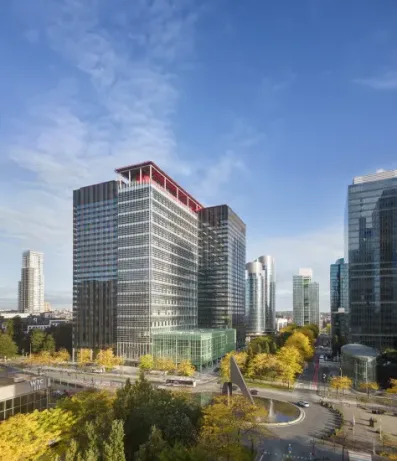
As a result, the jury unanimously selected ZIN in Brussels, Belgium, as the winner of the International High-Rise Award 2026/27. Brian Yang, as chair of the jury and the winner of the IHA 2024/25, captured the reasoning as follows: ”High-rises are no longer all about being a tall symbol of power. They are about the power to transform, to change, to respond to a situation. I think it's important for a neighborhood to be full of life, and that can be achieved with a mix of offices, hotels, and apartments, like at ZIN.”
ZIN is boosting the neighbourhood in which it is located
The jury agreed, that ZIN presented by far the most compelling overall narrative: It showed how the idea of refurbishment could be taken to new heights and given a new quality. In addition, ZIN is exceptionally large by European standards. With its 10,000 square meters of floor space, it serves as a major draw in a less attractive neighbourhood and, ideally, will stimulate further construction activity.
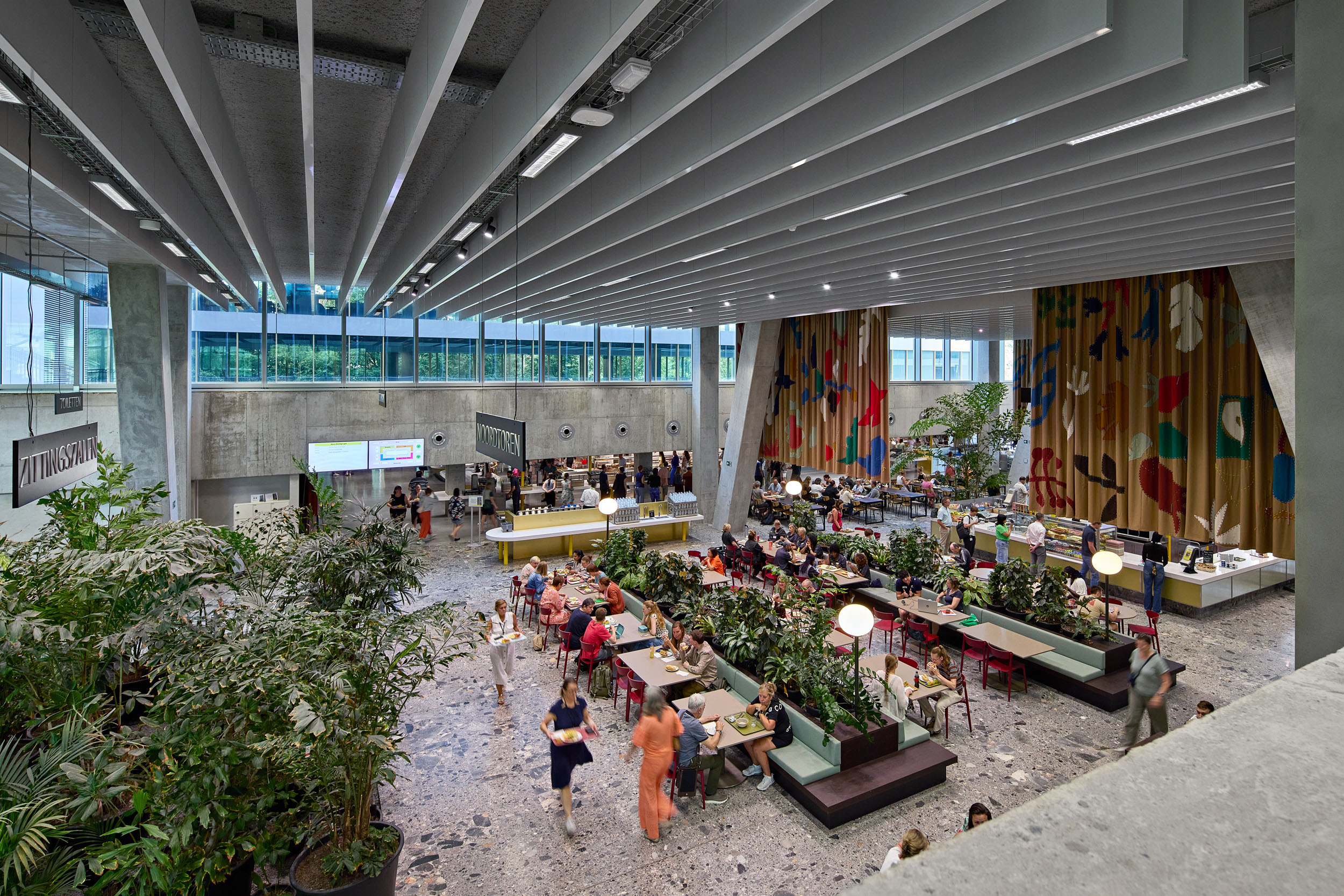
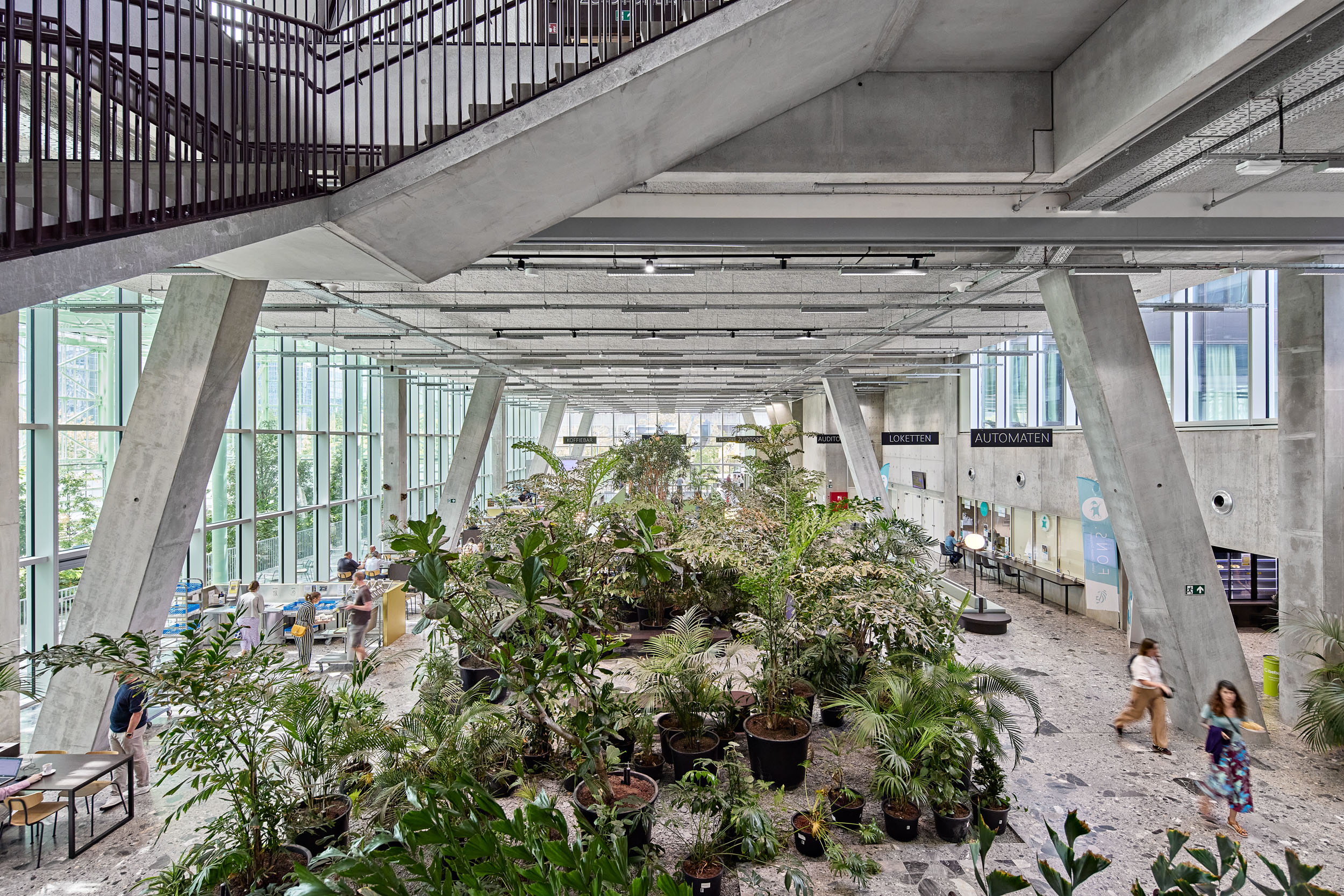
The jury concurred that, while the building might not be an incredible eye-catcher in aesthetic terms, this was precisely what made it stand out: Its ability to „do so much”, as Peter Cachola Schmal put it, without trying to be iconic. Brian Yang, as chair, confirmed this assessment: ”It seems like an amazing project that does everything a high-rise can do in a positive way: Through a process of transformation, it brings meaning and quality to the area, thereby strengthening the entire neighborhood. It enhances the surrounding area and features a wonderful internal topography. The transitions between public and private spaces are exceptionally well executed.”
The project rejects the strident claim of ”Here I am” and instead emphasizes on getting the message right. Whereas many of the high-rises in Brussels are classic glass-and-steel monoliths, ZIN breaks completely with that idea. The two original World Trade Center high-rises that stood here were stripped back to their cores and redeveloped by embracing between them an intervening new structure with double-height floors, designed to encourage mixed use, both vertically and horizontally. Offices, residences, hotel rooms, retail, and green spaces are interwoven to create a coherent unit that is never ”dead” at night. The new glass podium building to one side and the connecting tower, with differently spaced ceiling slabs, add diversity to the new/old build. The project achieved Cradle to Cradle certification for 95 percent for the new materials used. This represents a closed loop – endless raw material cycle rather than a waste one – a figure never before achieved for a European mixed-use project of this size.
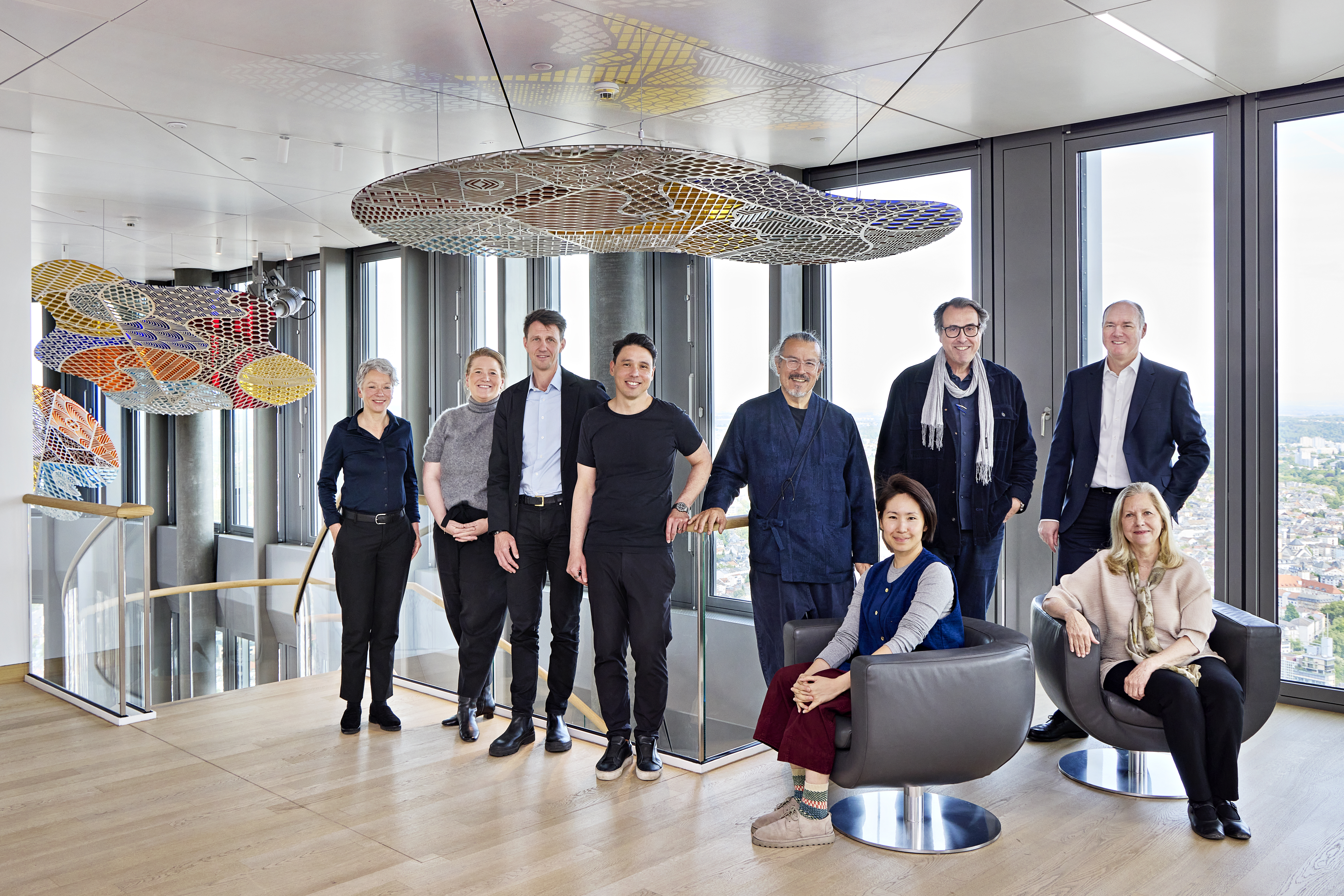
Of the more than 1,000 high-rises completed worldwide over the last two years, Deutsches Architekturmuseum (DAM) nominated 30 outstanding buildings from 12 countries. An international jury of experts from architectural and engineering practice together with the partners of the IHA, namely DekaBank, the City of Frankfurt, and Deutsches Architekturmuseum met to select the five finalists and subsequently the winner. The jury was chaired by Brian Yang (Architect, Partner BIG, Copenhagen).